TLC
Day of the DeadTLC’s work begins where public attention and official investigations have often fallen away: the group takes on old homicide cases and tries to solve them without charging survivors or families. Its role in the Roseanne Orozco case shows both the value and the difficulty of that work. By returning to neglected leads and listening to people whose earlier accounts were disregarded, TLC offers a route back into an investigation; by reopening painful memories and navigating questions of evidence and authority, it also exposes the limits of what a private cold-case effort can accomplish.
Scope and Access
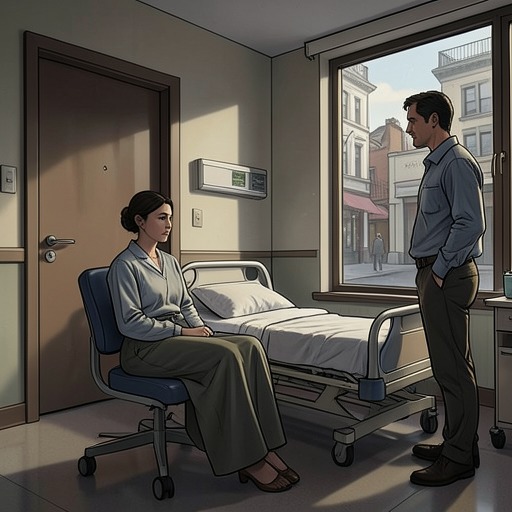
Brandon Walker identifies himself to Andrea Tashquinth through a wallet card showing his membership in TLC. He explains that the group investigates old homicide cases and charges no financial fee. The service is therefore accessible to Emma Orozco, whose family is not expected to pay for the investigation. Brandon makes clear, however, that free does not mean costless: bringing Roseanne’s case back into the present may renew pain for her mother, sister, and others connected to her.
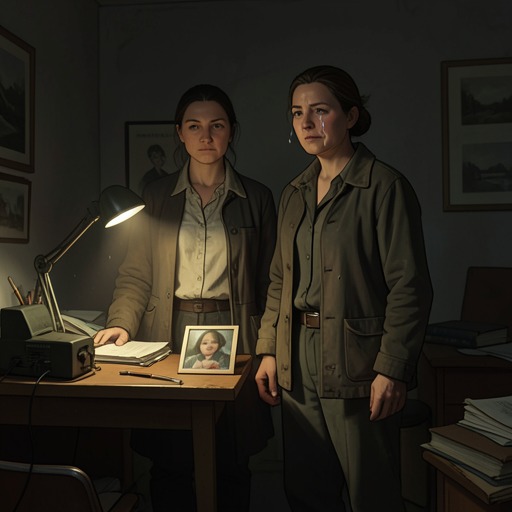
The case illustrates why such work matters. Roseanne disappeared from a hospital in 1970 and was later found dead, but her family’s questions remained unresolved for decades. Emma had waited a long time to speak about the case; after her husband Henry’s death, she said she wanted to know what had happened to her daughter. TLC’s willingness to take on old cases gives that renewed demand for answers somewhere to go, even when the original investigation did not produce a solution.
Listening and Reconsidering Neglected Leads
TLC’s cold-case approach depends on treating overlooked information as worth pursuing. Andrea recalls that, as a sixteen-year-old, she tried to tell investigators that Roseanne’s disappearance might be connected to the Indian Health Services Hospital. She says no one was interested in her opinion and that nobody listened. Years later, she again identifies the hospital as the likely place where something happened: Roseanne had been admitted for tests, and when their father arrived to take her home, she was gone. Andrea can only speculate about who might have been involved, but Brandon records her suspicion rather than dismissing it. He reflects that cold-case work requires following up on leads other investigators ignored.
That response also contrasts with the assumptions that had shaped the old case. Andrea confirms that people were convinced her father was responsible. Her recollection of the hospital had not altered the investigation when she first offered it, in part because she was young and her views carried little weight. TLC’s method, as represented by Brandon, begins instead by making room for her account and noting what remains uncertain. The point is not that her suspicion proves what happened, but that a disregarded lead can still be examined.
Cultural Practice and the Investigator’s Role
Brandon adapts his conduct to the people he interviews. Knowing that direct questions are considered impolite among the Tohono O’odham, he begins with an observation rather than pressing Emma for details. He avoids looking directly at her while she speaks, and his knowledge of the community’s language and customs helps Andrea relax during their conversation. The narrative presents this attentiveness as part of how he earns enough trust for family members to speak about a painful history, not as a substitute for their own decisions or knowledge.
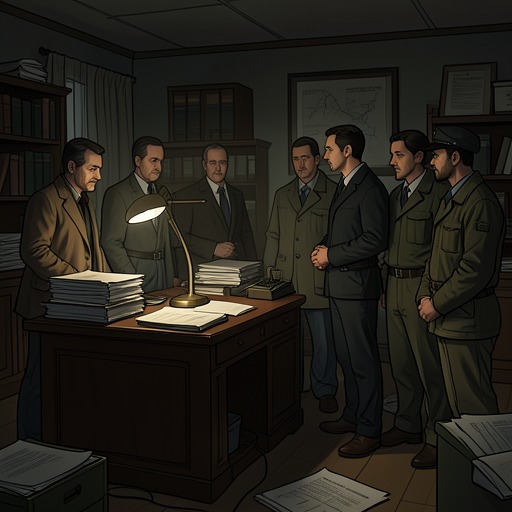
The investigation takes place against a history of uneven institutional responsibility. Because Roseanne was presumed to have been killed on the reservation by another Native person, the case fell to either the Federal Bureau of Investigation or local tribal police rather than the Pima County Sheriff’s Department. Brandon recalls that the tribal force lacked training, equipment, and money, while FBI investigations of reservation homicides were often cursory. Those failures help explain the absence of progress, but they are not evidence that TLC can simply replace public authority. The group’s work depends on returning to survivors’ accounts and records within a landscape shaped by jurisdiction, resource disparities, and earlier neglect.
Evidence, Authority, and Limits
Brandon remembers that a health-records study had digitized existing records from the hospital in Sells, including records dating back to the 1950s. Roseanne’s appendectomy in July 1970 might therefore be documented, but the existence of a record does not guarantee access to it. He expects that a request from him, a white outsider, could be met with polite resistance, and hopes Emma will encounter less difficulty. When Emma later reports that hospital staff denied Roseanne had ever been admitted while locating records of Emma’s own three hospitalizations, she insists that the denial is wrong. Her response turns the archive itself into a contested part of the inquiry.
The case also brings TLC’s investigative aims into tension with the requirements of a prosecution. After Emma and her relatives secretly exhume the remains of Roseanne’s baby without waiting for tribal council permission, Brandon thanks them but recognizes that the unauthorized recovery compromises the chain of evidence. As a private investigator seeking answers for survivors, he wants the inquiry to move forward; he must also consider whether evidence can support accountability in court. The episode clarifies TLC’s position: its work can reopen questions and gather leads, but it operates amid legal, communal, and evidentiary constraints that neither compassion nor urgency can erase.